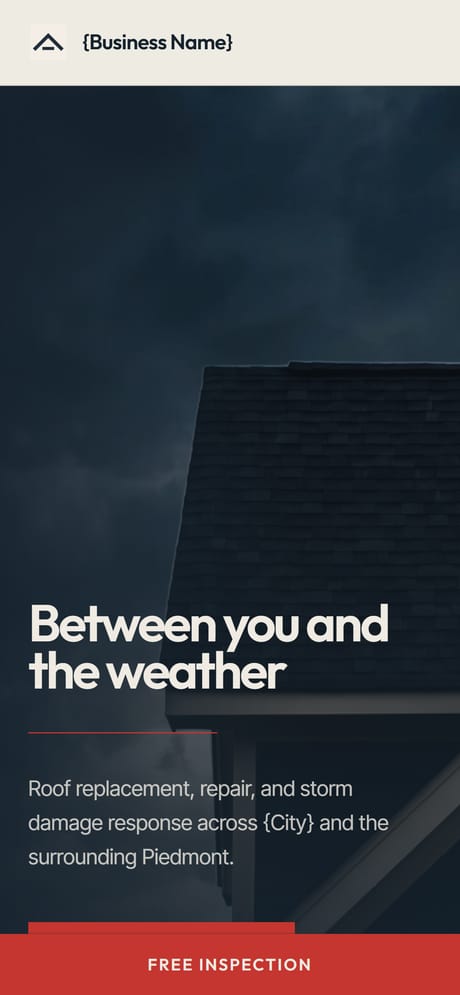
Contractor
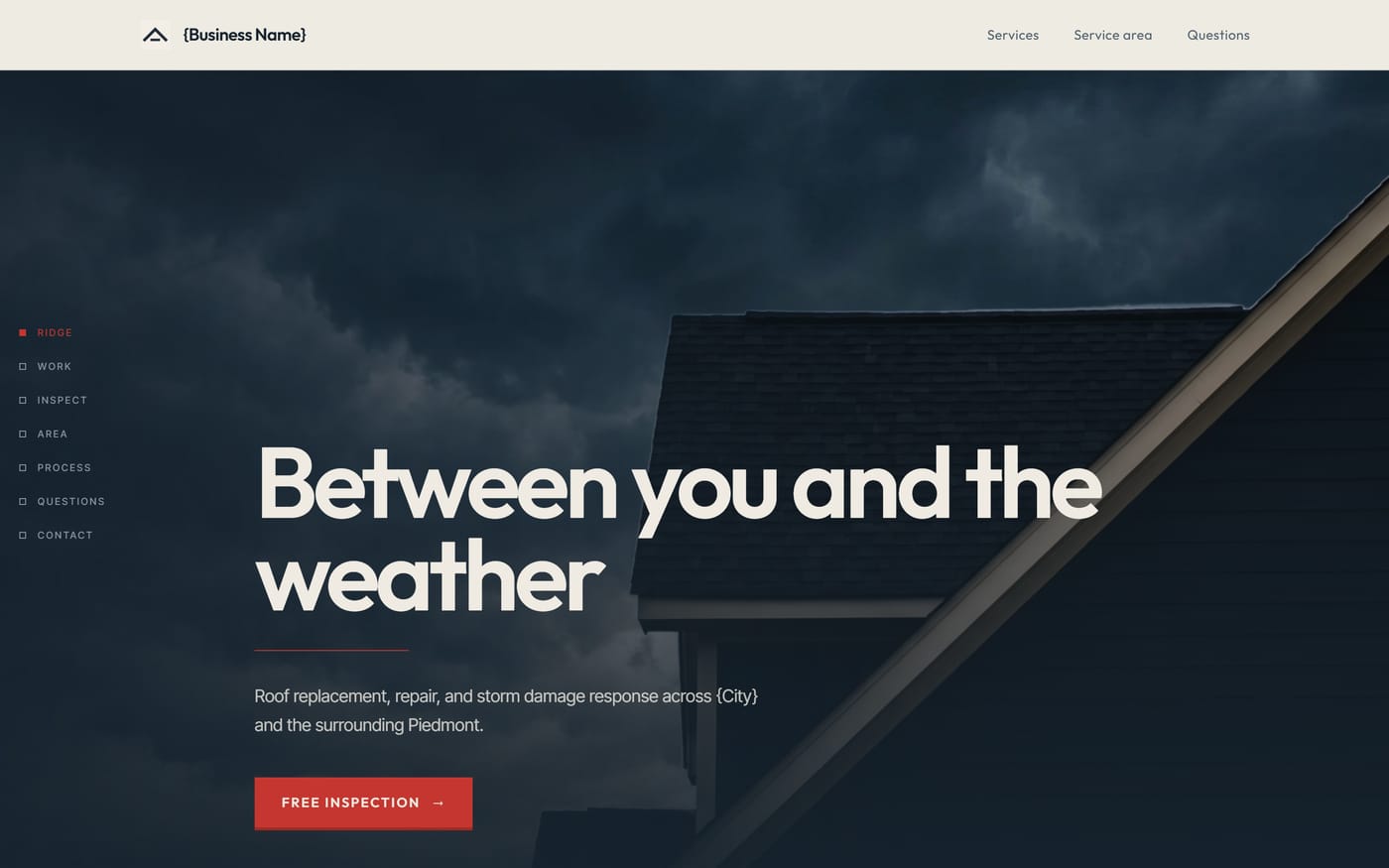
Work photography, phone number front and centre
For trades where people call rather than fill in a form. The number stays the biggest thing on every screen, and enquiries are stored rather than emailed into a void.
01 page
Kinds of website
The phone number, kept where the thumb is
Almost nobody fills in a form to book a roof. They call, and they call from a phone, standing in front of the problem. So a trade site is judged on one thing before anything else: how long it takes to reach the number. Everything else on the page exists to make somebody willing to dial it, which in practice means photographs of work you actually did rather than stock photographs of a roof in another state.
Your service list is written the way people search for it, which is rarely the way a trade writes it internally. The towns you cover are named, because a search for a job plus a town is most of what a contractor gets. If you want enquiries in writing as well as by phone, the form stores them rather than mailing them into an inbox nobody opens.
A page earns its keep by suiting the person who lands on it. These are not the same person from one trade to the next.
Some of these are live client sites and the rest are demonstrations, and each one is labelled. All of them are real deployed sites you can open and use. Yours is built around your own business.
Work photography, phone number front and centre
For trades where people call rather than fill in a form. The number stays the biggest thing on every screen, and enquiries are stored rather than emailed into a void.
01 page
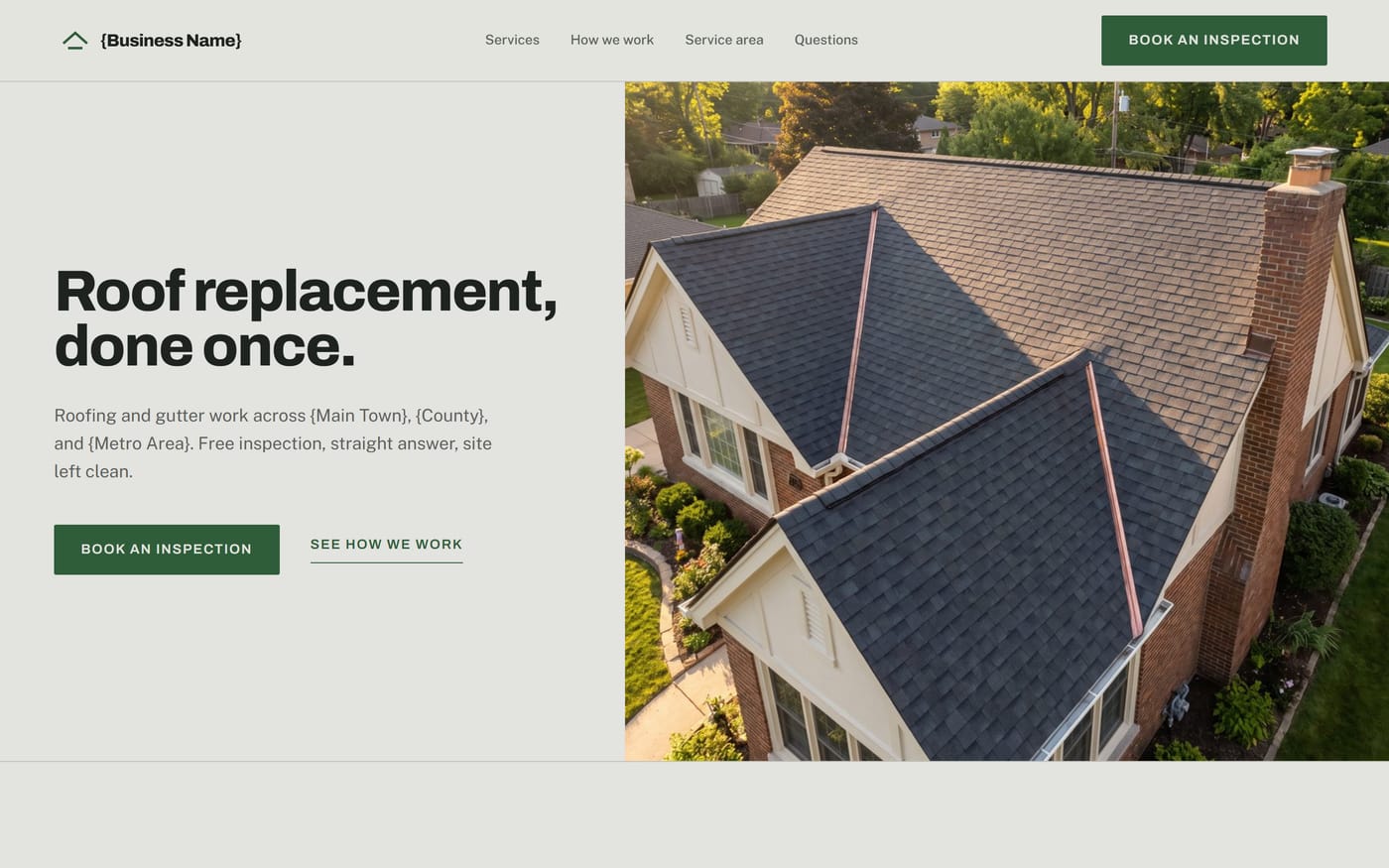
A quieter, more established look
The same information in a calmer treatment. Suits a business that wants to read as established rather than urgent.
01 page
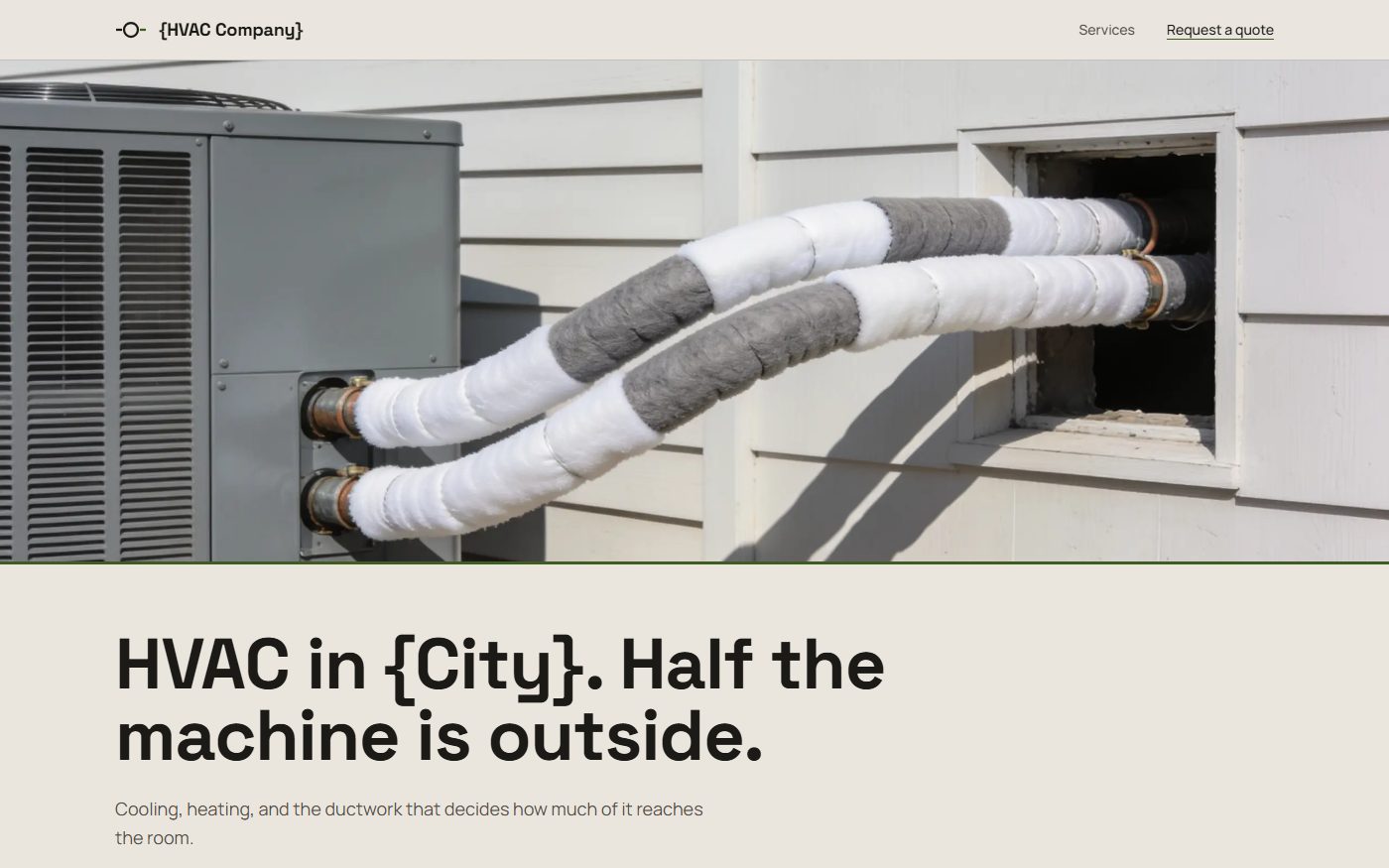
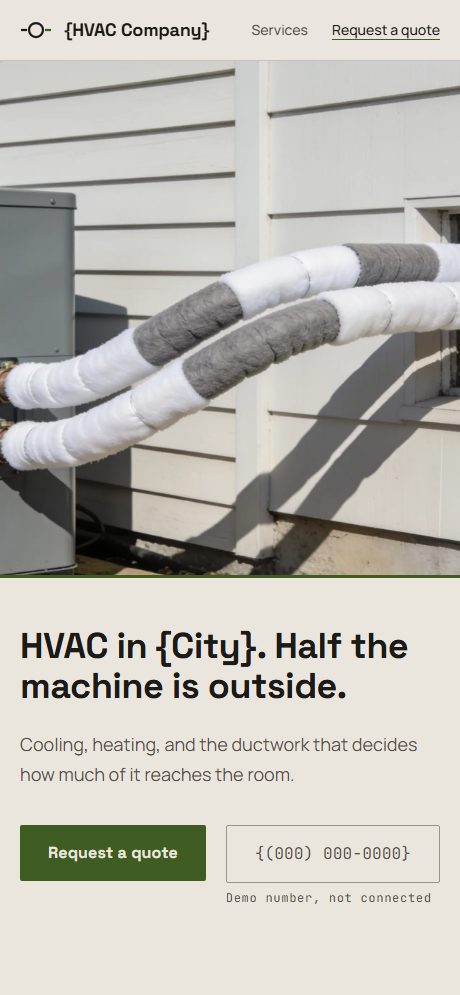
Two pages, with the service list on its own
For a trade where the job gets diagnosed before it can be quoted. The services carry an address of their own, so somebody searching for one repair lands on the page about it.
02 pages
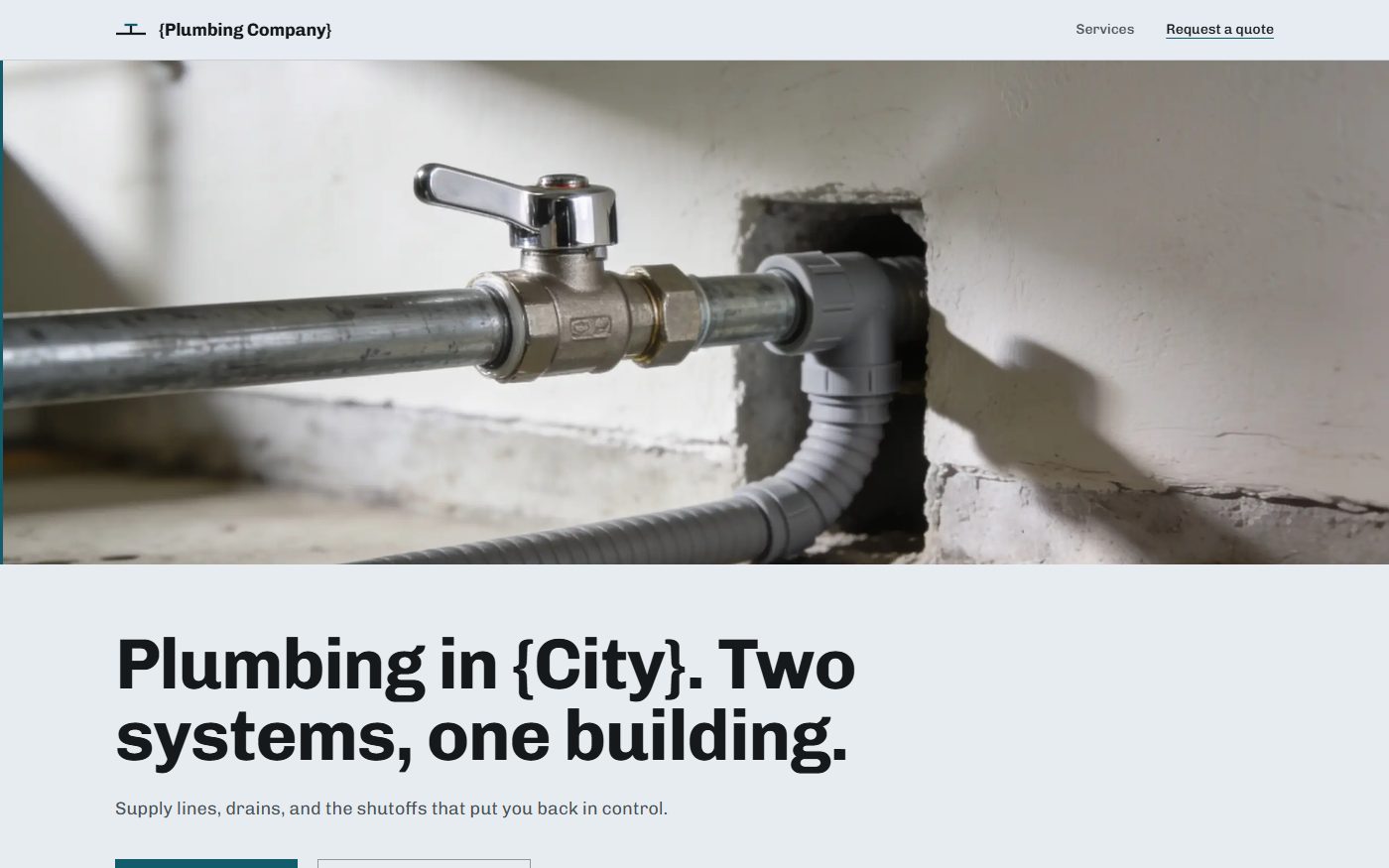
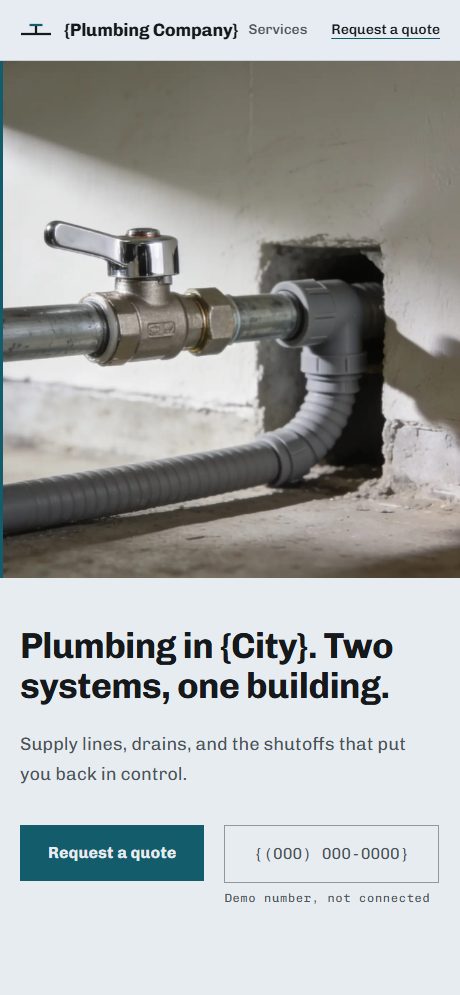
Two pages, cool ground, one deep accent
For a trade people look up in a hurry, on a phone, somewhere damp. The quote request sits in the header of both pages, and the service list is a page rather than a paragraph buried on the homepage.
02 pages

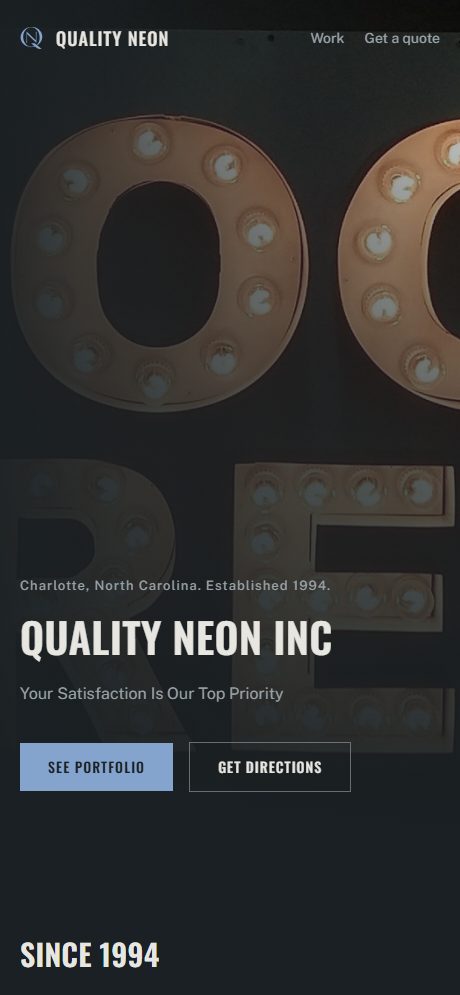
Live client site: Quality Neon
Four pages, and an owner's dashboard behind them
The biggest build here. A portfolio of real installs grouped by how each sign is lit, a quote route and a survey route, and a dashboard where the owner puts a new job on the site themselves without calling anybody.
04 pages
If none of them describes your business, say so in the form. The audit is free either way.